We just got back from Montana - me for 6 weeks, Ernie bookending our course with a week-plus on each end.
We had some utterly delicious adventures.
Our friend Paul was eager to launch his Rocket Ovens kickstarter (now live!), which was a great excuse to bake some delicious treats for our Off Grid Kitchen team, the Peasant PDC, and anyone who happened to stop by.
If you, too, want an off-grid rocket bake oven, please check out this Kickstarter, which will not only provide you with delicious details on the whole process (from building the oven to baking the goodies), but will also support our ongoing work.
Affiliate link*:
https://www.kickstarter.com/projects/paulwheaton/rocket-ovens-feature-length-documentary?ref=28qt31
(*Full disclosure: "Affiliate" means your patronage directly supports us here at Ernie and Erica
with a modest kickback, as well as supporting our creative
collaborators who designed, built, and filmed the whole thing. A lot of the up-front work on these prototyping projects is volunteer, so we are heartily in favor of folks making money off the best success examples.)
In other tasty news:
Montana experienced some major wildfires last summer, and this spring's intermittent rain brought on flush after flush of delicious morel mushrooms.
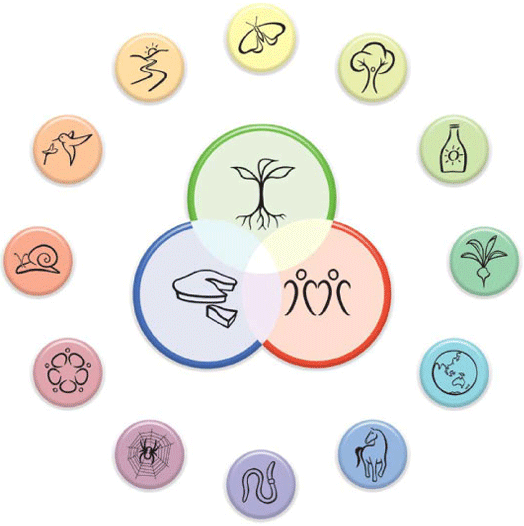
Teaching my first Permaculture Design Course was a tall order. Permaculture is a whole connected system of nature-based design, building regenerative systems that feed each other, provide sustainable food and livelihood for people, while supporting a resilient future for life on Earth.
Turns out, the details of how, why, and what are a lot to cover in a 70-hour classroom course.
Nothing that left me sleepless, but definitely some late nights and some first-time teacher flops along the way to a modest success. (Teaching nature-based design is much better done outdoors than in a classroom, especially an after-lunch classroom with limited AV and a bunch of tired campers!)
I have to say, I find it a lot easier to recommend an oven design that bakes a good pizza, than to troubleshoot a hypothetical self-sustaining food forest for a Zone 4, semi-arid climate!
At least my home garden is looking lush after a 6-week absence. So I must be doing something right. Time to plant some sprouted potatoes, wash and pack my laundry, and get ready for fire season.
With summer finally here, we're getting into moderate fire dangers. Burn bans are going into force across the western USA. Please be careful with your wood-fired projects.
Although indoor, properly vented and screened cookstoves are often exempt from burn bans, please pay careful attention to proper screening. Recommended for spark arrestor is 1/8" mesh or finer. Due to the possible clogging effect of screen, allow 3x the chimney CSA flow area for screen surface area, to avoid choking the usual draft for most stoves. This can be as simple as a tube of screen about 1 foot long, extending from the stovepipe to the rain cap.
Thanks for reading!
If I'm off on a fire before this gets updated again, wish me well, and stay safe this summer yourselves!
Love,
Erica
and Ernie
p.s. That Kickstarter link is:
https://www.kickstarter.com/projects/paulwheaton/rocket-ovens-feature-length-documentary?ref=28qt31 If you love this sort of thing and want your own link, please let me know.
-EKW
Showing posts with label hands-on education. Show all posts
Monday, June 25, 2018
Wednesday, April 11, 2018
Connecting the Gears
| Image from FreeCycles.org, Missoula MT |
Our recent Oregon visit introduced me to some living legends from Ernie's family lore.
Our mutual friends at Seven Fires are still cooking up powerful community collaborations around natural building and sustainable skills. I'm excited to work more closely with them come fall.
On my side, we had a great conversation about sustainable business life lessons, and making a living doing what you love, with the remarkable Bill Campbell of Equilibrium LLC.
It all ties back to our personal and big-picture goals: resilient communities, adaptive problem-solving, giving ourselves permission to thrive by supporting a thriving future for life on Earth.
So what's on our plate today, to do all that?
| Image from FreeCycles.org, near Missoula MT |
Peasant Permaculture Design Course, May 22-June 21, near Missoula MT:
Design principles and on-the-ground realities of what it takes to create a resilient, Earth-friendly lifestyle.![]() |
| Image from permacultureprinciples.com |
We have lined up some wonderful field trip hosts and guest speakers, and I'm still pulling more strings to bring back some of our favorite past students and collaborators to join us for this course. Plus, the marvelous Boots program manager will be co-hosting the projects for this course, for a lot more hands-on practical experience than most PDCs have time to offer.
This permaculture adventure is going to be amazing. And it's surprisingly affordable - so if your friends are balking at the usual PDC price tag, point them our way.
Read more, or sign up here: https://richsoil.com/ppdc.jsp

Our host Paul has also invited returning guests, former students, and collaborators to drop in while we're in the area for what he's calling the "Schmoozaroo." Basically, if you've ever been part of our collaborations at Wheaton Labs, you are welcome to drop by for free, camp or join in some of the land projects or just stargaze, and be part of the vibe. This workshop will be no charge, but limited to 6 participants, hand-picked for their skills and past contributions to our work. Please get in touch ASAP if you're interested in applying for a spot. Rocket Off-Grid Kitchens, May 17-19
(No, it's not a giant bicycle-wheel dome. Guess what he's going to make?)
Yours,
Erica and Ernie
Friday, April 1, 2016
Appropriate Tech: Branching Out
Well, now that we've got the Rocket Mass Heater Builder's Guide off to a decent start,
(Kickstarter! Click Pledge Share!)
what shall we do next?
The obvious answer is to double down and teach a lot of rockety stuff, maybe cash in on the book promotions by starting some online courses or something.
But we're your crazy R&D people. We like developing new things more than we like marketing proven stuff.
One thing I'm excited about this year is learning more tech tricks.
| Ryan Chivers polishing a tadelakt bowl (Denver Post) |
One of the project ideas is a rocket hammam (like a Turkish bath, a heated steam-bathing room).
I am so excited by the idea of a soapy-smooth sauna-like bench, which if it all goes well would be waterproof enough for anyone. I am eager to try, despite my very beginner experience with the tadelakt process.
...
I would also like to stop waiting around with my hands in my pockets when I need help welding or pipe-fitting on the stove prototypes.
If I had realized earlier that I would want this skill, I could have learned from my late grandmother Enid, who was a top-grade welder in Portland's Swan Island shipyards during the war effort. (She claims she only made the top-six list for her yard because "they didn't know if Enid was a man's name or not.")
Or I could have asked my father-in-law before his eye problem which left him, as he puts it, "blind in one eye and can't see out the other." He is a bit embarrassed by the rough quality of his work nowadays, and I guess that makes me embarrassed to ask him (he puts in a ton of help on our projects anyway, whether we ask or not).
![]() |
| I bet it was Priscilla Smith who made him look all dreamy like this... big vision, black fingerprints, that's Tim all the way. |
Between Morocco and our book events, the PDC is a conflict for me. But if I squeeze, I can get in there for almost the entire AT course. Get that Shrimp heater prototype of mine up and running, and maybe we could even plumb and seal the darned hot tub. Or build a new darned hot tub (if you have never tried to 'rescue' someone else's abused redwood, it's a real tragedy). Maybe I can tadelakt the hot tub! But wrestling with a hot tub all week could be a waste of time, when there's so much else to explore.
Others will be presenting solar, power generation, pumps, all kinds of DIY tech. I can earn my keep with some rockety demos, and maybe show off my softer side with some fiber-based structural tech like wattle work, pole lashings, sewing. (I did learn that from Gran'ma Enid, at least!)
Or bring the physics side with passive solar, heat transfer, simple machines. We haven't hit the details real hard yet, just excited to get the team together!
So jump on that early bird registration, and convince these Australians we want them out here already. They've got a superb forest gardener, and Howard Story of Permaculture Asia, also lined up for the courses.
...
Back to the Kickstarter: To keep knocking down those stretch goals, please keep sharing. We have 10 days left, and while the initial popularity has been amazing, it does take creative repetition to keep bringing in the newbies right up to the last bell.
We've just announced our stretch goal for the $25,000 mark: if we reach that level, we'll write up a brand-new e-book on a topic we don't normally share with the public: Bitter Lessons from Rocket Mass Heaters: Hopes, Misconceptions, and Faceplants. Or something like that. Basically, all the 20-20 hindsight, terrifying prototype moments, and surprise errors behind the simple-sounding rules in the Builder's Guide.
Serious builders, given a chance to set down together, swap these stories of nightmare jobs and near misses like a private currency. So we're planning to put that bonus out for backers at $50 and up. We figure that's the "serious builder," book-plus level, where you appreciate our work that much more because you have seen the dirty-hands workshop videos, or maybe have built a few home-built projects yourself.
And in any case, those backers have gotten themselves a copy of the "how-to book," can't blame us if they build a "bitter" project for their own stubborn reasons.
We have more than enough personal embarrassments to fill the whole book, but I'm considering letting our top boosters and colleagues submit a story or two, just to add to the feel of it being a coffee-klatch. We certainly won't name anyone else's names without their express permission.
Whaddya think? Sound more exciting than a teeny tiny mass heater plan?
| Kiko's mini-masonry heater (one possible example of a Teeny Tiny Mass Heater) |
(The good news is, if we hit $25,000, we make both.)
As a sort of bad-planning April fools' joke on myself, the North American book is going to print this weekend, a full week before the Kickstarter closes. I'd love to be sure we can order 500 to 1000 books, for a much better per-book rate, as soon as possible.
So please send in all that last-minute support you can muster, and consider April 3 as this week's "last minute."
Send us other stretch goal ideas, or creative marketing.
Or just sign up as a booster and do your own creative marketing, and take full credit.
Thanks again for keeping our lives exciting.
Yours,
Erica W
Wednesday, September 17, 2014
Paddling in the sun
| Ernie's getting comfortable in the racing kayak |
Olympic kayaker Ben Kvanli lives in San Marcos (where the weather is suitable for boating all year round). On Mondays he helps out at the Center for the Intrepid, coaching injured service members and veterans on kayaks and float-boards in their little swimming pool. On Thursdays he invites veterans and a whole flotilla of experienced paddlers along on various river paddling trips - from shooting man-made rapids to exploring big broad reaches like this one near Austin.
Ben's back yard drops off to a convenient landing on the San Marcos river. Ben's in-laws live in the area too. His lovely wife teaches third grade, and they are getting ready to start a family. (Seems kind of like an alternate-universe version of what our life might have been like, except for them being very different people and very much themselves. Despite our lovely experiences here, I don't see Arctic Ernie voluntarily moving to Texas full-time.)
If we do "make it" back to where Ernie has the luxury of boating on a daily basis, we also hope to give back like they do. I'd love to have weekly outings where kids, families, veterans, people of all kind can come together on the water.
If working with earth is "grounding," playing in the water seems to help get things flowing again. Issues work themselves out - trust, confidence, body movement. You start to regain a sense of rhythm, balance, and choice. Staying balanced above your boat is a matter of constant adjustment, which soon becomes unconscious.
| Yulia, my adventure buddy (second time in a kayak, ever - first time solo. Brave girl.) |
Once you can trust your balance and your boat, it's hard to beat the feeling of being buoyed up and supported, and the freedom and speed of gliding along as fast as you care to go. Even if you stop paddling, the boat keeps going - there's a relationship, an elasticity, between the effort you put in and the return that rewards you.
| Wading birds don't leave a river just because it is full of plastic trash... it's not like they can go to the fish market instead. |
| Our landing zone, and more lush greenery |
We saw fishing birds, heard something (bats?) overhead going under the bridge decks. I paddled along with Yulia for a while, then she and her husband Jon had some quality time while I poked around looking for wildlife. Ernie and Ben had started chatting while they paddled and just glided off into the distance, easily leaving the rest of us behind.
It reminded me how far I've come from some of the early adventures with the Portland skin-on-frame crowd. During one trip on the Willamette, our boat-provider started racing upstream with some of the other guys, and I felt like I was being left behind and tried to keep up. For half-a-dozen strokes I was gaining speed and almost keeping up, and then I dumped the boat as hard as I've ever dumped a boat. I got out, found my paddle, and got one arm around the partially-swamped boat and started towing it toward the nearest dock, which happened to be the OMSI one by the submarine. The last little paddler in the group followed me, not sure what she could do to help (being even less experienced in water rescue than I was). I was almost all the way to the dock before the speedy guys up ahead noticed that we were not following, and eventually came back over to see if we were OK. Ernie was not along on that trip, since he'd already dumped the boat they had for him a couple of times starting out, and it just wasn't working well enough to be worth struggling with. Those kinds of experiences tended to make me feel like I was not doing so well - and I definitely did not feel like I could trust or count on the more advanced paddlers in that particular group.
But in Texas, I was reminded that struggling to keep up with experienced whitewater and blue-water (open ocean) kayakers is pretty intensive training. I started out by just asking for the open boats (the ones that you can't get stuck in if you flip them, recommended for novices), because I have never learned to Eskimo-roll, and I've always thought that was a prerequisite to being a "real" kayaker.
On the second trip out, Ben needed to swap an over-ambitious veteran into an easier boat, and asked Ernie if he thought I could handle being in a closed boat. Ernie replied "sure," and seemed to think I could handle most any boat he had available. By the end of our time together, I tried one of the racing kayaks, and seemed impressed when I handled it without dumping even once. Apparently, dumping your boat is a normal part of learning to kayak.
The occasional bath doesn't seem to bother Ernie, or stop him from training, except that he gets frustrated if he can't help dumping the boat when he's trying to practice something else. The IDEO doesn't fit in the boats, so it's all dependent on his ability to compensate and balance for that injured leg. And whether he's wet or dry certainly doesn't affect my respect for Ernie's athletic abilities.
I still think I should try to learn eskimo-rolls at some point, and I am still intimidated by them. (I never did learn to swim fast enough for crawl-stroke breathing to work out for me; I have a hard time trusting myself enough to perform precision maneuvers underwater that have to be completed before I can breathe again.) But as long as I get to keep my head above water while I swim, or stay on top of the boat, I'm having fun.
I tend not to want to stop when we're out here on the water. Eventually you might get hungry, but we usually grab some drinks and snacks on the way out, and stay perfectly content for as long as the day may last.
Labels:
Balance,
boats,
Ernie,
hands-on education,
IDEO,
survival,
Texas,
training,
Travels,
water,
wildlife
Sunday, January 1, 2012
Okanogan Permaculture Study Group
Since moving to the Okanogan Highlands, we've gotten interested in local culture, and particularly in the number of creative, conscientious, and experienced folks who are dedicated to good stewardship of their lands.
Our newly-forming Okanogan Permaculture Study Group includes a lot of these folks: private farmers and foresters and ranchers; agency employees who look after public lands; nature lovers such as hunters, fishers, and conservationists; builders and garden designers and teachers; all kinds of people who are thinking how to improve their own little piece of heaven in sustainable ways.
Friday, November 25, 2011
Oysturkey and the Tea Stump
Ernie can't eat poultry, so we did a wild-rice and oyster 'stuffing' with oyster mushrooms and lots of other yummy stuff in it. I got silly and made it look like a turkey, complete with oyster 'wattle'. We shared it, and lots of other good food, at the Campbell family thanksgiving dinner. There were only 15 people for dinner this year, plus another 5 who stopped by after dessert - down from 30+ people when I was growing up.
The program has the kids outdoors every day, sometimes all day, and so they wanted a way to make hot tea or snacks, without risking the kids getting hurt. We've done tea stoves for outdoor kitchens before, but this site had a special challenge: since it's a shared space, the stove has to be able to move to a storage shed when not in use.
So we went looking for light-weight, weather-resistant, insulative materials that could handle internal temperatures over 2000 degrees Fahrenheit. And be safe on the outside for little fingers. We found Western Industrial Ceramics, who cater to glassblowers and other small-scale artists and businesses, as well as large-scale foundries and high-temperature furnace installers. Nice to meet people who are equally happy to help you on a tiny project, while telling you about orders from the aerospace industry!
We used their ceramic-fiber insulative board, and a cool-looking tube they happened to have in overstock, to make a lightweight stove that works beautifully. It boils a gallon of water in under 10 minutes (a liter takes less than 5), on a tiny handful of kindling. (You can see the amount in the fuel feed; it's literally the split pieces of one or two sticks, and a couple of 'big' pieces of 1x2" scrap. After the water boiled with this amount of wood, we added one stick at a time, and kept it boiling for another 20 minutes on two more sticks, just because we could.)
Plus we got to decorated it like a magical stump. The brass rim helps keep the heat around the pot, and little fingers away from the danger zone. The outer shell is plaster-of-Paris on canvas, with a non-toxic clay paint. Not super waterproof, but reasonably tough, and easy to repair.
I'm going to post the basic plans on our website soon at ErnieAndErica.info; the one alteration will be a slightly taller heat riser (the pre-formed core is a bare 18" tall) so the pot is up above the tip of the flame and doesn't get so sooty. Paul Wheaton of the Permaculture Forums is also interested in working with us on a bigger model that could be used as a turkey-fryer (or, for my own personal preference, an outdoor cookstove for canning when it's hot in the summer, without violating the burn bans on open flame).
We were pretty pleased with ourselves. Hopefully, the teachers will be happy with it - they are planning to coat the outside with some linseed oil so it is a little more waterproof.
Another fine mess at Mom's house, by Ernie and Erica.
Saturday, June 11, 2011
Dancing with the Future
Working with kids is a lot like contact improv dance, or any kind of theatrical improv games. You never know what's going to happen. Excellence comes from having a good general plan and fitness, yet being flexible enough to say 'Yes!' to a better opportunity.
Working with children is like improvisational modern dance, except instead of a troupe of peers with similar skills and training, you are dancing with the future.
I just got done with two really fun training programs, one as a trainee, one as a trainer. Luckily they came in the right order. '-)
TrackersEARTH has doubled in size yet again this year, which means bringing a lot of perrenial staff like me back on full-time for the summer, AND hiring almost the same number of people from outside. And buying a gorgeous chunk of land up in the Marmot area (between Sandy and Mt. Hood). So we all went there together to get to know each other, and practice the skills for handling large numbers of children in multiple sites at once. One new and interesting plan for this summer is Silent Wednesdays. That's right: from the moment the kids walk in with their parents, until they walk out the door again after pick-up, nobody talks. We prep them for this on Monday and Tuesday, and of course emergencies may arise, but we role-played this a little bit (I've done it with adults for cob building, too, and it seems very cool.)
Then I went to teach a training for the Multnomah County Childcare Resource and Referral Center. On paper crafts. Which would be a piece of cake for me, even after a long week... except that I had put IN THE COURSE DESCRIPTION that we would 'Use ordinary paper to create a marvelous world: moving birds and fish, jumping frogs, glittering snowflakes, seasonal
mobiles, memory mosaics. Refresh your creative spirit, get the kids crafting, and recycle your own paper scraps into cards,
placemats, party favors, and gorgeous handmade paper art."
Now I can do each of the things above, and I've taught many of them with good results.
Yet the above list represents a LOT of hands-on skills to learn in 2 hours, especially if I need to coach adults through their creative anxiety or directions that are not written for their learning style. And many of the ways I would make these projects are not suitable for children under age 3.
Fortunately, I had Kiko's mother's excellent book, Making Things, by Anne Sayre Wiseman. Photocopies from this became DIY instruction pages. I got permission from an origami enthusiast from the UK, David Petty, to reproduce some origami diagrams from his website.
I was prepping for this class between training for Trackers summer camps, and taking the CDL trainings and exam. I had to get a new printer, which had a defective part, so I had to go to the 24-hour copy center anyway, but I also needed sleep...
I headed up the hill for the 3-day overnight Trackers training camp, feeling very much exhausted and overburdened. Ernie came along for the first day to advise on their primitive outdoor kitchen. We drove back down that night, I gave a ride to another trainee in the morning, and then settled in for training.
My colleagues are awesome.
We had trainings on handling mandatory reporting, safety with fire, knives, bows and arrows, and how to make fiery magic tricks. We had trainings on traditional handicrafts like spinning, knitting, and finger-knitting easy enough to teach 4-year-olds. We had meetings of groups who will be coordinating the camps with themes like Middle Earth, Four Elements, Ninja Stealth, Jamey's Magic School Bus Time Machine, Wilderness Survival, and School of Magic. We hung around by the campfire and made music, had a Dr Horrible Sing-Along Blog viewing with 40 people singing along, celebrated a birthday, and slept in tipis or under the stars. Staff from the Bay Area came up and shared little fragments of their lives with us, and returned with a skin-on-frame canoe to use in programming.
The capper was a 2-hour silent hike / stealth game / foam-arrow 'tag' / bear-, elk-, and cougar-tracking adventure. We never did learn the entire shape of the game, just went out in groups with some of the competent team coordinators and practiced silent communication and quiet awareness. Got muddy, hid in ferns, met the traces of large and small creatures, and got yelled at a lot by birds and squirrels. There's something humbling about being among the first people to crush a patch of oxalis and pathfinder, and knowing you will have the chance to share this delicate understorey with hundreds of children over the summer.
I came back to town relaxed and centered, and much more aware of the grittiness of concrete and traffic that surrounds my daily life.
So when the time came to take my prepared printouts, and make the childcare-providers class, I was cheerful and confident.
I invited them to role-play teaching each activity to each other, whether as adults or as children of the ages they supervise. We had a marvelous session, with everyone contributing ideas for fathers-day projects as well as learning plenty of new paper crafts. We even invented a Jumping Tadpole, which is easier to make and jumps farther than the best Jumping Frog that I was able to find online.
It's a pleasure to work with each other cooperatively, instead of trying to guard some kind of superior place! I like being a facilitator much better than a lecturer.
Tuesday, April 26, 2011
Who wears the apron around here anyway?
“What you have to understand,” Ernie said, “is that I’m basically the wife here.”
“I can’t drive, can’t work in the areas I know. I can sometimes cook, and keep the house warm & tidy. I’m basically here to support you. You can do whatever you want to do, and come home to a nice place. So, what do you want to do?”
“I don’t know,” I replied, “I’ve been asking myself that for years.”
‘What if I want to be the wife?’ I thought to myself.
‘What if I want to stay home, raise babies, putter away at hobbies and home-made fixes? ‘What if I get sick, or have a complicated pregnancy, and can’t work?’
I was raised in an era between two worlds. So I have examples for how to be a housewife, an equal partner, or a high-flying career-woman. It’s not the lack of choice that makes it difficult – it’s the plentitude of choices, and the differences between all these examples.
My grandmother or mother might work, and be proud of her work – yet her work would rarely pay as highly as her husband’s uninterrupted career. In my grandmother’s time, the wife rarely worked outside the home after marriage. In my mother’s time (and still), two-income families are the norm.
But to raise a family on one income, in this era, and that income (wince) mine?
My maternal grandmother was widowed while her six children were still in school (the oldest in college, the youngest eight years old). She supported them on a lab tech’s wages, and enjoyed the work. She put all but the youngest through college before becoming ill herself, and succumbing to pancreatic cancer at age 59.
“Body-Talk” medicine lists the pancreas as the seat of worry, of the kind of intellect that is implicated in “thinking too much.”
My paternal grandmother worked from her early school graduation at age 16, until her marriage at … 22? And then had her hands full raising four children in 27 different houses. Her husband kept them constantly on the move, working a series of well-paid but temporary jobs on the big hydropower construction projects then transforming the West. One of my uncles later suggested he could have made more money by staying at one job until the work was almost over and they promoted the last few people to higher ranks, but he was never willing to risk being out of work, so he’d always move on before the jobs got scarce.
My mother worked while I was very young, then stayed home for about ten years. When her youngest entered kindergarten, she trained as a teacher. My father worked this whole time, but got laid off about the time she was finishing her masters. So we lived on her income for a while, while he tried to start a business, then went to work for another employer. The stress of that period contributed to their eventual divorce. She continues to work in the same school years later, taking pride and satisfaction in doing excellent work. Her students return to visit her year after year.
I’ve met farm couples who worked together as a team, to all appearances happy. She “does the books,” fixes meals, he does a bit more of the outdoor work and mechanical repairs, but they both go into the field together to round up the big herd, or into town together to arrange the big sale. But that was in New Zealand. Is it still possible here? Or have earthy farm families been de-stabilized by the combination of corporate farming, women’s lib, and antagonistic intergenerational politics?
There was a time when I would have loved to find a man willing to play the supporting role. I could have a career, and kids too… and perhaps, if I were very lucky, avoid having to do dishes or housework ever again. Or at least until Saturday.
But in the meanwhile, I’ve lost track of my career.
I have no steady income – only part-time and temporary gigs. The idea of supporting us, when I don’t know where I’m going myself, frightens me more than the role reversal.
I’ve worked here and there, summer jobs in construction and architecture, five years as a full-time science educator, résumé filler material includes book credits and R & D work. Under the influence of niggling dissatisfaction (my younger siblings married out from under me, I stopped moving up in the education hierarchy, and work had begun to feel routine), I cut loose. For over a year, I did nothing ordinary: traveled most of the way around the world, made wedding cakes, did migrant farm work in NZ, and travel writing. On returning to Oregon, I investigated sustainable businesses in Portland. I had almost made my mind up to find a for-profit, “practical” business that did sustainable work, when I stepped sideways into a not-for-profit job and a part-time role as my grandmother’s caregiver. I continued working on writing, education, and graphics projects – but my main considerations were family and community, not career.
I met Ernie through non-profit community work. He was handsome and winsome, and mutual friends spoke highly of him. Then he was hit by a car going 40mph. By the time he got out of the hospital we were pretty well attached. When the insurance money ran out, we financed another year or two of his recovery with pot-luck fund-raisers, candy sales, and freelance work with various outdoor and hands-on skills groups.
The drama of this phase of ‘my’ life story has become focused around Ernie: his injury, his frustrated ambitions, his dreams. He wants a boat. He needs to figure out whether he can work enough to get by, or whether he can qualify for Social Security at age 42. And oh, yes, one of his ambitions is to make me happy.
So what would make me happy?
And, incidentally, provide enough income to cover the costs of living, health insurance, and starting a new family?
If I only knew…
If I knew now what I will know later, what would I do?
Stop worrying, and try something.
…
The first part of this essay was originally written in 2008. Those 'part-time and temporary gigs' have increased to a steady trickle of workshops, hands-on science and craft classes, and project-based work with TrackersNW, PSU, Tualatin Hills Park & Rec, and other local groups. I still sometimes feel like a fool for not putting it all aside for a full-time job – but hey, with the current economy, the jobs I want have hundreds of applicants, and I'm enjoying the work I do already.
Somehow, this spring, it kind of kicked over into “Hey, I'm running a business.” Getting tax advice (from Ernie's retired-accountant stepmother). Learning about SEO (search engine optimization) and promotion, especially word-of-mouth and Internet buzz. (Thanks, Paul.) Getting ready to open an online 'store' for selling plans. Working on freelance curriculum to be published by TOPS, and getting some art commissions as well. People who we respect highly, are referring to us as the best experts in rocket mass heaters – and while the resulting interest is mostly requests for free advice on permies.com, it's still flattering, and we are getting calls for actual workshops and consultations from all over North America, and increasingly from Europe, Latin America, and Down Under.
It doesn't quite pay the bills yet, but Ernie has finally started following up on the disability claims he started to file in 2006. So our hope is, that I can continue building this business into something that keeps us productive and happy, while Ernie chips in as he can and takes as much time as he needs to keep his leg up. We had a great conversation with Paul Wheaton a few days ago that turned into this 2 hour rocket mass heater podcast, but then yesterday the weather crashed down and it is all Ernie can do to be civil while seeking distractions from the pain.
He's blown through two pairs of VA-issued aluminum elbow crutches already. They say he's using them too much. So he's looking at building his own, rather than go back every couple of months to face ridicule over needing a third pair. The man has a hard time sitting still! (He literally paces on the phone, which is amusing to watch, with the two arm crutches and juggling a tiny cell in his large paws. So if he drops your call accidentally, now you know.) It's part and parcel of his amazing physical intelligence, and the frustration of this injury that he handles with such good humor.
We're looking forward to our out-of-town trip, and to steadier summer weather that will allow Ernie to better predict his daily energy. That might be a good topic for when I get back – Ernie and Erica on the road.
Subscribe to:
Posts (Atom)