Showing posts with label biomes. Show all posts

Sunday, March 31, 2019

40 Days of Fire and Ice - Week 4

 On the weekend drives to Wenatchee, we see the snow receding from the hills.  This week's rain produced some spectacular rainbows.  (Photo taken by my passenger David P.)

We have also noticed, in the receding snow, that rodents did a tremendous amount of damage to the orchard trees over the winter.  We collected dormant twigs, "scion wood," from each damaged tree, in hopes of bridge grafting later in the spring.

Tuesday, March 26, 2019

40 Days of Fire and Ice - Week 3

Not a lot of things are on fire or frozen this week (yay!), so we have some pictures from the archives.

not a great place or time of year to be handicapped...
thankfully, this is mostly melted away now.


Snowy day in the hills (January 2019)
I love these black-and-white "branchscapes."
Could make a killer jigsaw puzzle.

frost

frosty day in the clouds (early winter 2018)

"Lampwork" artist in Coos Bay, OR last winter.

Hour 20 of a 28-hour shift,
day 15 of our strike team "week."
Our task force leader stomping out a sagebrush fire.


View from flat-tire adventure,
scouting firewood sources.  Fall 2018

View of current smoke over old burn,
on way to Kettle Falls for Boyd's Fire (Aug 2018).


Asparagus sprouting from recent burn,
Boyd's Fire (2018)


Burned-over valley (2018)


Tree and burned stump holes,
Cougar Creek Fire (2018)

Lingering hot spots on inaccessible ridges,
Cougar Creek fire (2018)


Moose seen on way to Boyd's Fire, 2018

Working fire ahead.  2018

Patchy (uneven) burned forest, Boyd's Fire (2018)


Finally, a challenge: Can you guess what this is? 

(Yes, we encountered it on a fire assignment.
It's a close-up of something.
Good luck.)

Email me if you have a guess: erica@ErnieAndErica.info.


40 Days of Fire and Ice - Week 2

The badges came.  These are the same graphic as we used for the truck decals, now in a nifty 2" woven/embroidered format.

The snow is going.  Here are a few more of the pictures from last week's marvelously misty weather.

Now the snow is receding - all the south slopes are tawny bare again, with tiny green fuzz starting to show.


Academy continues to go well.  All 16 of our classmates passed their practical exams Sunday, for the basic fire fighter skills.  We won't know for sure on the written exams until they process the Scantrons in a week or two, but it's looking like Mt. Hull has 3 new structure-qualified fire fighters.  We have 4 more weeks to complete the HazMat Awareness and HazMat Operations parts of the course, then graduation is scheduled for the evening of April 14.

Okanogan County recruit academy folks
bunk at Malaga Station Friday and Saturday nights. 
Gary keeps bringing steak, so the rest of us try for worthy side dishes.
This week's pot-luck was truly magnificent.

Assistant instructor and heat haze
seen through window of burn building.

Instructor Don Welch in front of
the Malaga hills
Car fire prop

Car fire prop - fun, if not super realistic.


The snow remains on some of the north slopes and shaded creek beds, but also on some of the tops of the slopes - an interesting "snow cap" that outlines the whole shape of each hill along the Columbia/Okanogan confluence.

Not sure what allows this snowcap to remain on the top of the south-facing slopes - air currents? radiant frost? just the slight change in angle that means the flattish ridgetops are not facing the sun as directly as the steep slopes?  As you can see, the snow comes down along the ridgetop well below the elevation of bare slopes above, so it's not just an elevation/snow-line thing.
Photos taken by David while I'm driving us home.


We still have plenty of slush and snow on the roads up here above 3000 feet, but it's starting to melt and drain during warm days.

Tuesday, May 30, 2017

Mycology and Human Networking

While we're hip-deep in projects in Montana, I thought I'd share this essay that I started in late winter.  (What a gift this year's birthday inspiration has been!) 

Where we are weak or broken, 

there is our best chance to connect with a greater whole


I'm writing this post in March, but scheduling it for May. I hope you are smelling those intoxicating healthy-dirt smells as you work in your garden, hugel-kultur, or start hiking the back woods.

Paul Stamets has a lot to say about mycelial networks (the hidden webs and channels that support fungi and soil health, transporting nutrients long distances to feed mushrooms, trees, plants, and healthy soils).  See Mycelium Running if you want a truly geek-out version of that story.


Image credit: Wikipedia
The image from those lessons that's resonating for me this week is the weird, observable fact that individual mycelial cells, in those networks, are busted open.

Most plant cells, animal cells, and single-celled organisms are little sealed bags of carefully-portioned living matter, guarding their "guts" and nutrients from a presumably-hostile outside world.


A diatom, amoeba, bacterium... in fact most living cells ... have a carefully-guarded perimeter.  Symmetrical shells, cell walls (sometimes multiple layers and armor, in the case of woody plants and diatoms), and/or additional defences like chemical-detecting cilia or toxic slime coatings.  Yet the amoeba can just about give us dysentery, and requires pretty cushy watery conditions for active survival.

Our own cells - muscle cells, blood cells, nerve cells - maintain a pretty good perimeter despite all the specialized ports and exchanges they make for vital nutrients and waste.  It's not a bad recipe for staying alive.  Much of life on earth goes with it.

But what about alternatives?

Mycelial cells have wide-open gaps at both ends, and their nuclei and organelles may flow back and forth along with nutrients and fluids.  One mycelial cell alone would be a blue-plate special, spilling its guts into the cannibalistic micro-ecological void.

But a mycelial cell is almost never alone.  The mycelial networks of underground fungi can support whole forests, overcoming mineral and water shortages that would kill a crop-farmer attempting to raise the same biomass on chemically-sterilized soils.  Some species can convert "dark, dank, and stinky" toxic petro-chemical dead zones into food for bugs, birds, and new life.  Other specialists can turn the most rot-resistant trees into long-lasting nurse logs for huckleberries, mushroom soup, and wild honey.

Mycelial Network, Electron Micrograph
Image Credit:
Fungi Perfecti blog, fungi.com
What you can do with a network of "broken" individual cells is pretty darn amazing.  The more selfless each cell, the more the whole network can speed the flow of goodness.  A mycelial network (or similar self-organizing networks like the Internet) is a pretty great way to combine limited organisms into a meta-structure.
We animals require specialized channels (veins and arteries) to carry blood and nutrients to individual cell areas, and when our oxygen and waste removal can't keep u with our activity we definitely feel the burn.  Worse, we are highly susceptible to arterial bleed-out or heart attacks when one area gets damaged or blocked.  With vast webs of cooperating cells, mycelial networks can bypass unproductive channels and grow new 'main routes'. 

It sounds like a pretty effective way to handle "drinking from the fire hose" rates of transfer - both of vital fluids, and of vital information.  The Internet functions in a similar way, with many self-developing channels of information instead of a single, centralized broadcast system.


I'm using the power of mycelial networks as a metaphor for dealing with my own weak points.  Where I have a weak point, like procrastinating my bookkeeping, or letting bedtime routines slide to finish "one more thing," it's not healthy to sit alone with it.

I've been more or less trying to hide those weak spots, or use "willpower" to overcome them.  Press that weak spot up against a wall, beat myself up about it, worry that all my business "guts" might spill out and show that I'm not perfect.

Instead, lately I'm learning to show my weak points to trusted friends.  To watch others' strengths and weaknesses, and to ask people for help in areas where they really shine.  Or even just to ask.

Barbara Greene recommended an excellent local accountant from Brewster, WA (a few hours south of us in the same county).  Skirko Business Services helped me learn the WA state sales tax system for destination-based sales.

Mariah recommended a helpful young lady as a potential virtual assistant.

Our new neighbor gave our Facebook page a makeover, with some edited graphics so you can see our whole logo:
https://www.facebook.com/ErnieAndErica/

During my February sleepless-euphoria experience, I even broke down on the "grownups go to sleep on their own" myth, and asked my sisters, mom, and favorite aunties to take turns calling me at 9pm and "put me to bed."
(See earlier posts from February 2017, such as "Erica Turns 40 and Levels Up.")

My wonderful sister Teresa reported feeling a series of emotional reactions when she saw that email:
"What?  You can't do that... grown-ups can do that?
"How come she gets to do that?
"Why can't I do that?"

Such personal coddling is NOT a long-term substitute for basic adulting.
After about 8 days of much-needed sisterly support and advice, I'm now back to a self-managed sleep cycle that is better than my old 'normal'.  Because when I need to, I'm using all my sisters' tricks: everything from mindfulness, physical activity, serotonin-boosters like Vitamin D3 and melotonin, and just plain regularizing my schedule with 9-6 office hours and a 10pm bedtime.

I notice that I didn't get here by toughing it out, or by making it Ernie's job to cover for me.  For a health or mental crisis, it's a pretty good practice to let trusted friends know what's going on.  It's part of the adult, responsibile communication skills package, you might say it's "reaching out instead of burning out."

And I think this sort of reaching out could be good for everyday business, too.  I'm watching for ways to build a team, where each person has good lines of communication, connection, and support at their weak points.

So is your main ambition in life to be an "I got mine" giardia cyst, or are you ready to open up and become part of something larger?
... one link in acres of mycelial soil networks..
... a sensitive eye with a whole glowing jellyfish to call upon for response
... a connected link in a larger community of co-creative intelligent life?

I should be clear that I'm using "you" very loosely there. 
Because this is probably not news to YOU, personally.

This feels like an insight that I'm finally articulating after experiencing it most of my life.  I have the good fortunate to have a LOT of inspiring collaborators - family, friends, and on-the-same-wavelength "strangers".

We have always been part of this larger collaboration. 
We just forget sometimes.

Hope your week brings you plenty of wonderful reminders!

Yours,
Erica

Monday, May 22, 2017

Getting our wild geese in a row

Ready... set... LAUNCH! 
(the lead gosling is already in over its head)
We are getting ready to head to Montana for most of a month.

Arranging for things to thrive during our trip - Ernie, me, Radar, and whatever else fits in the car; and the plants and homestead while we're away.

Taking a few more pictures of goslings before they outgrow the adorable fuzzball stage.

All lined up and taking care of business...

Flotilla in excellent formation


(Ernie is getting pretty good with that new-to-us camera, these are all his photos.)


Paul's Kickstarter for our Permaculture Design and Appropriate Tech courses has less than 48 hours to go.  They are installing a dedicated, separate internet link for streaming live video and chat from these courses to online supporters.

We have been warned that with over 40 people on site for these courses, the regular internet for other business may be slow.  So I likely won't be able to post in-person updates from Montana.  I've pre-loaded a couple of things for you while I'm gone.

If you'd like to follow along, now's the time to sign up for that Kickstarter before it closes.

Here's the link: https://www.kickstarter.com/projects/paulwheaton/live-stream-permaculture-design-course-and-app-tec?ref=ap8ze3


...
"Please form two lines as you exit the flotilla..."
Ernie's dad paddled the canoe out today, and measured the deeper part of the pond.  7'6" of water.
It's within a couple of feet of the highest he's ever seen it... and probably twice as deep as I've ever seen it, as it's been during the past 6 to 10 dry years.

Which means the gees actually have TWO islands, although the moat for the new one is a lot shallower than the old one. 

Yay!
Water in abundance, and a good place to put it.

Wednesday, May 10, 2017

Rocketing into Spring: Frog Ponds, Stoves, Garden Goodies


Heading outdoors for summer?
Consider these fun projects for outdoor kitchens, camping, and greenhouses.

Rocket into Spring Combo Pack:
https://permies.com/t/65450/Rocket-Spring-Combo-Pack-Ernie

...

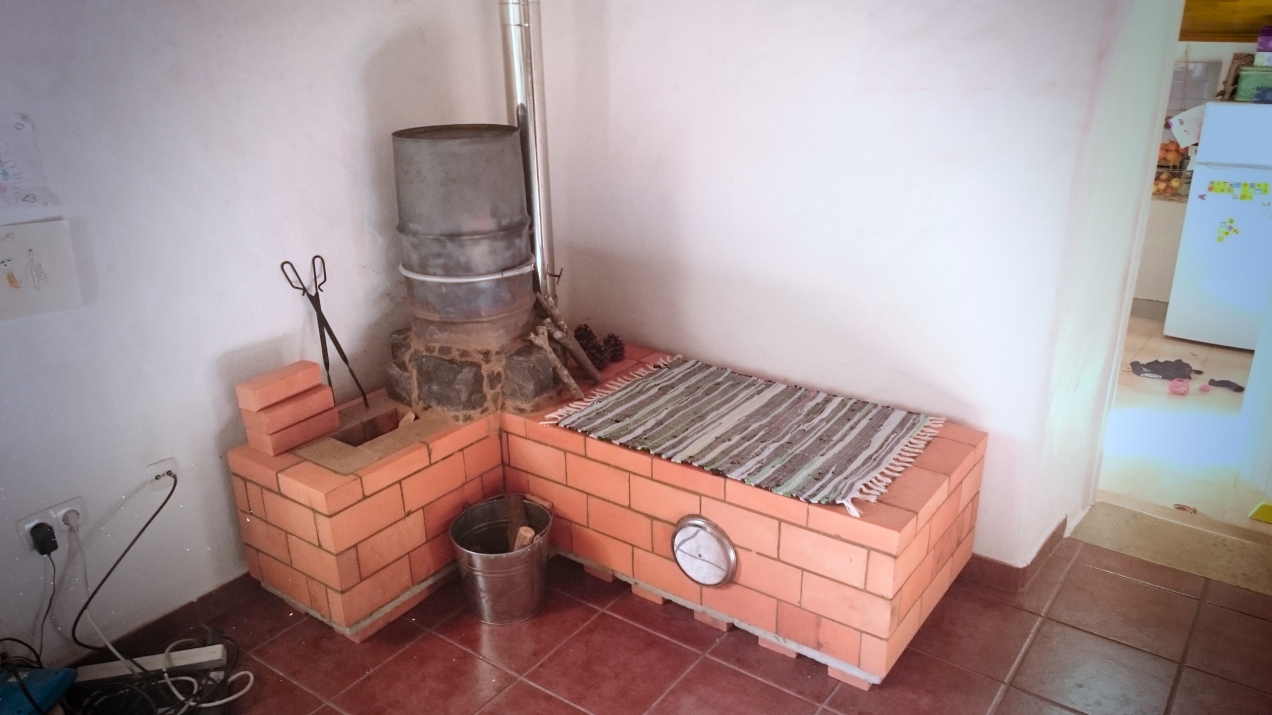
People are not just reading our book, they are building cool things with it!
("My Creation... It's ALIIIIVE!!! Mwa-ha-haha....")

Check out this cute little mini-bench project:


RMH Builder's Guide
https://mypermaculturesite.wordpress.com/2017/03/05/rocket-mass-heater/

(To buy The Rocket Mass Heater Builder's Guide,
click HERE
.)

We are going to be video stars again in Montana next month!
This year's Permaculture and Appropriate Tech courses are sold out, so jump on Kickstarter quick if you want a taste.  Any pledge will get you great project resources from many different instructors.  The full-price video access options will include something over 200 hours of instruction (likely to be streaming or thumb drive, not DVDs, because the full two weeks of each course would take too many discs).
https://www.kickstarter.com/projects/paulwheaton/live-stream-permaculture-design-course-and-app-tec?ref=ap8ze3


The pond is filling - most water we've had in 15+ years!
The island, dock, and grazing horse...


While I was attending Flood meeting led by the county's Emergency Management Director, Ernie and Ron spent about an hour and a half sitting on the dock, letting their feet dabble in the water.

They reported seeing a LOT of ecology in this pond.  Even though it has been shallow for so long, the culvert allows little fish and other critters through from the lake.  Ernie reported some little fish, maybe sticklebacks, as well frogs, newts, water-striders, boatmen (beetles that swim with legs like oars), two or three kinds of ducks, and our resident Mr. and Mrs. Goose Goose.

(Ron has been visiting the pond regularly each morning and evening, training the dogs not to bother the Canada geese.  As a result the geese are also now getting less panicked around us, when we mind our manners.  And they have what passes for names, in dog-training language.)

Monday, March 21, 2016

Spring Cleaning (wood-lot finesse and wood-shed style)

This is the time to check your wood shed.

Most of you, I'm sure, are checking your garden seeds, and frolicking in whatever flowers you can find.  Sorry to be the bearer of bad news, but it's not quite time to forget winter yet.

While you're waiting for the right day to garden without compacting the earth, don't forget that next winter's chores need to be done NOW, too.
This is the last season for responsible wood-burners to lay up the full supply of fuel for next winter.  Depending on climate, you may already be running a bit late.

As we've discussed before, dry wood is the only wood that can be burned efficiently, and dry wood is not generally found in nature (especially not during mid-winter storms). It takes planning ahead.


A pretty decent woodshed
for very cheap (almost free). 
Think of your wood shed as a similar structure to a food dehydrator.  It has openings above and below the wood, keeps rain off while letting sun and wind have access to the stack.
The more effectively it circulates air around the wood, the more wood you can dry efficiently, and the less wood you'll need to burn. 

Wood over 6” to 8” diameter, in wildfire trainings, is considered “thousand hour fuels” or longer - meaning that it takes months for the moisture level to change significantly.

If you do need to “emergency dry” some fuel for the end of winter, chop it down to about 2” across will help it dry faster (weeks, as opposed to months).
You could chop it smaller yet (pencil-sized fuels dry within hours), but running an ordinary woodstove on nothing but kindling-wood is an easy way to over-fire and void your warranty.

It's much better to put up seasoned, dry wood, well in advance. Gathering it can be part of your winter cleanup and garden prep. 

Our current woodshed (December weather)
If you don't have a good wood shed yet, this might be a great time to pick up a few extra pallets from the home-and-garden supply or nursery, and get cracking.

There are a number of good designs that are simple to build; the following are just a few ideas.

It's hard to beat the basic, time-tested woodshed design:

- a nice big weather-proof roof, with overhang to protect slat sides.

- space for at least 1 year supply (preferably 2 years, if you cure your own wood rather than buying it cured).

- racks or poles to allow air flow under the wood
- ventilated sides or air holes top and bottom (if the shed has solid sides, racks or spacers can help encourage air flow along the sides too).

You can get all fancy and re-invent the concept, adding a clear roof for solar dehydrator effect, or a loft for tools, or side sheds for garden tools and lawn equipment. I have never seen anybody complain about too much shed space.  It does pay to consider the location before building (about 30 feet from the house, or 50 feet if you plan to store flammables and chemicals, and live in an area where wild fires are common).  Consider truck access to load and unload wood and other gear, and the role of the shed as a collection point for clutter (so you can keep the rest of the yard, and view, looking nice.)


A simple but super-effective woodshed: divided,
each half big enough for one full year's supply,
with room for tools & chopping.

A pretty decent woodshed for very cheap (almost free). 
A portable version could be skidded out to the wood lot,
then trailered back in once the wood is dry.
A drawing of our 1-year woodshed
(same as the photo).

This was our wood shed for 1 year.
(It might have lasted longer
if we knocked the snow off the roof more...
but it did the job until we could build better.)


In a few climates you can get away with a wood "rick", a pine-cone stack, like a haystack.  Not ours.

And if you are tempted to do something with tarps as a temporary solution... mostly, just don't.

Unless you can get substantial air movement under the tarp, and keep any condensation on the tarp from running right back down into the end-grain of the wood, a tarp is more likely to make a mushroom-farm than to help your wood dry.
An intelligent, but not sufficient, attempt
to get some wood-drying function from a tarp.
(If the tarp sides were lifted away from the wood,
so condensation and rain runoff would have somewhere to go,
this high-string pup-tent might work.

Fungus reclaiming log rounds left on the ground
(The fungus is not only eating some of the fuel value,
but it will also enhance the wood's ability to hold moisture.
Great for nurse logs, not great in a fuel wood pile.)


Ever come across the solar-distiller survival trick?  If you are in a desert without water, you can try picking a sunny spot, dig a shallow pit, and fill it with green branches.  Seal the top of the pit with a plastic sheet, and place a little cup under the low spot to collect the condensation.  (The transition from hot days to cool night is useful for helping the water condense as the plastic surface cools.)  I don't know that I'd expect it to work terribly well, in terms of collecting enough water to be really useful in a survival situation, but it could be a lot better than nothing.

However, it also illustrates why putting a tarp over a green woodpile can actually slow its drying.  You basically collect all the moisture from the wood (plus the damp ground), and make sure it rains back down right on the woodpile instead of escaping into the air.  Waterproof plastic tarps are sometimes used when cultivating mushrooms, to ensure that the wood does not dry out too fast for the mycelia to take root.  In other words, a tarp over wet wood keeps the wood wet.

If the wood is not wet when the tarp goes on, a few weeks under a leaky tarp, with ordinary ground dampness, and condensation collected by the tarp, will make the wood wet.  The Chimney Sweep Online gives the analogy of leaving a sandwich in your fridge in a plastic bag, or just sitting out on the shelf with no baggie.  Which one will dry out?  Which one will rot into unrecognizable goo?

A tarp can be useful for fending off a nasty sudden downpour (hint: for about half a day, following which you need to remove the tarp again to let the wood dry out)  or possibly as a door-flap for a structure with a solid freestanding roof.  We did use ragged old tarps to make sides for our pop-up-tent wood shed, but we kept the wood well back from touching the sides.

Turkey tail fungus,
a common inhabitant of damp wood piles
(and incidentally, rumored to be a medicinal mushroom)
Otherwise, skip the tarp, put your rain coat on, and load that wood into its proper storage sooner rather than later.  In the balance of things, a half-day getting wet while being loaded into the proper woodshed is not going to hurt your wood that much - not compared to spending the 3 dryest months of summer growing mushrooms under a tarp because you left the job "for later".

Cut the wood to length now, as well, since the end-grain does most of the work of wicking moisture out of the wood.

Damp wood can hold 50% of its own weight in water.  It takes a lot of energy to boil-dry a few extra pounds of water out of every load in your wood stove.  That is energy that could be heating your house.  So by securing your wood now, and getting it properly dry, you can cut your wood consumption by more than half (compared with burning nasty, wet, green wood). I will always load the full annual estimate into the wood shed,  based on that first year when we had to fall-source our wood.  But the earlier I do it, the more is left for next year.

As a chronically lazy person, that is a savings in time, labor, and resources that I can't ignore.  It is well worth skipping the pleasures of procrastination in order to do less total work, not to mention that it's less weight to haul, and easier to split the wood and kindling once they're properly dry.


Who's burning what?
(note multiple plumes across valley,
rainy days are popular burn days)
Most of the Western states will be under burn ban by June, with restrictions on running a chainsaw or other power tools in the woods.  So now is also the time for Western homesteaders to do their annual forestry: tidy up those dead-and-down trees, limb up those trees that are ready for ladder-fuel reduction.


This is a little more than
"one 4-foot pile with 1 person supervising"
Instead of burn-piling it, and making a nasty pall of smoke to dinge up our fresh spring air, bust it into 15" lengths and put it aside for your winter woodpile.
This winter's storms
dropped several trees.
The storm-damaged logs more than
cover next winter's fuel needs.
 And one final thought: I was super-grateful to find these little surprises in our woodpile last winter, when Ernie was in the hospital.

So this year, I'm making a few of them for both of us... or maybe for his folks, who knows.  For whenever they're needed.   Country "sick days."
Country "sick days:" Ready-made kindling,
stashed in the woodpile.


These can also be used as "vacation days," keeping Mama happy while you're gone fishing.

...
Update:
March 24 wood progress.
Front-right is the dry stuff
from inside the pinecone stack,
right rear is the wetter stuff
from the outside and bottom.
I've gotten a lot farther on stacking the woodshed.
As of March 24, this was how far: three rows, just over half a cord, of Ernie's pinecone stack outer layers in back, and the good stuff (dry interior) on the front-right for this year's remaining fires.  We are down to burning every other day, roughly.

As of April 6, I now have all of Ernie's pine cone stack (the wood from the outsides and bottom, that was too wet to burn right now) on the right.  It's a little over a cord, so probably enough for next year. 

I've started stacking this year's windfall on the left.

We found somebody's treat collection in the bent cardboard tube, while cleaning up that left side.

Truffles?  Puffballs?
These dried squirrel-snacks
nearly filled a cardboard tube
we had stored in the woodshed.